What Can and Cannot Be High-Pressure Cleaned
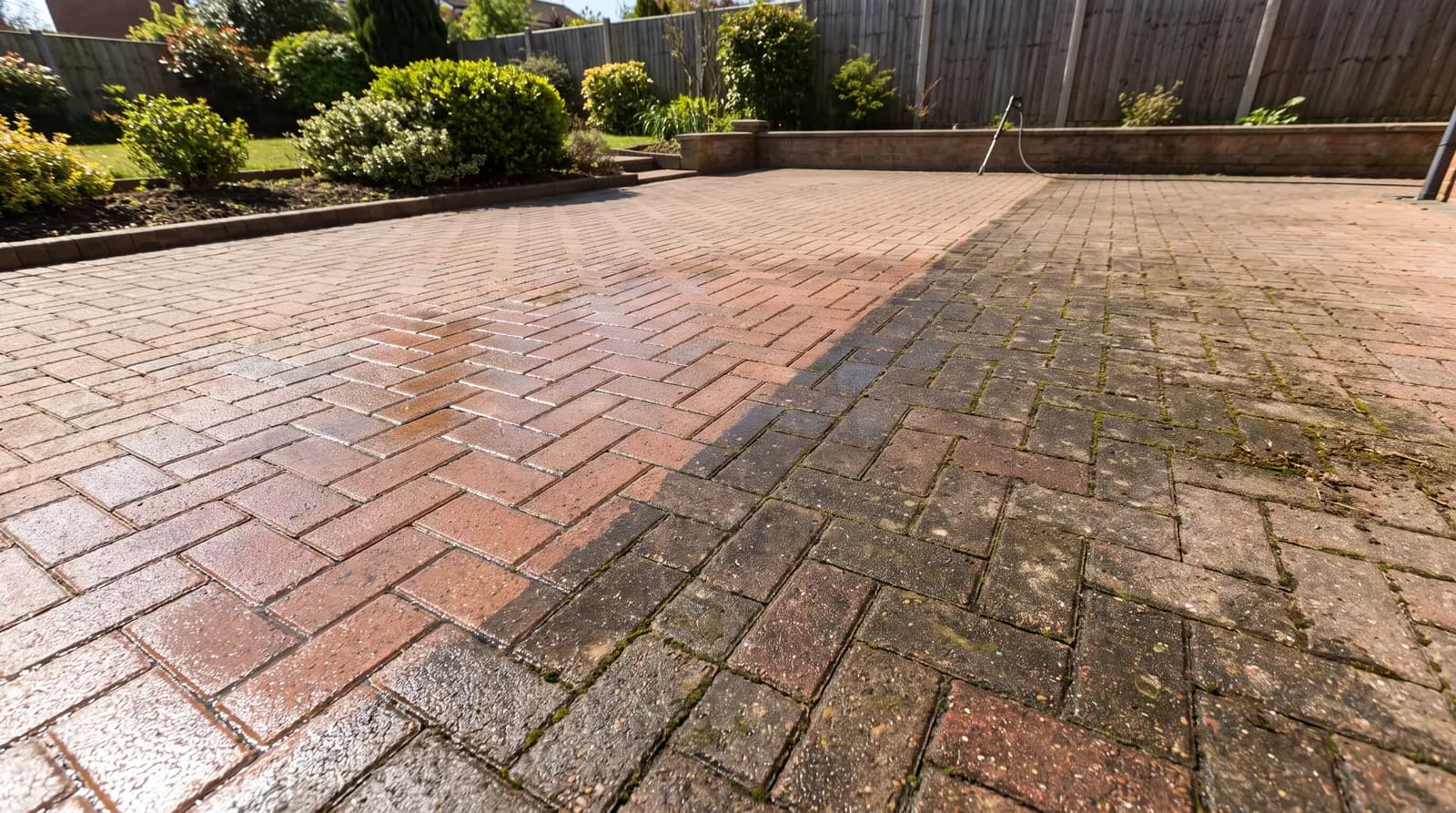
Hard, durable surfaces can be high-pressure cleaned: concrete, exposed aggregate, brick and stone pavers, masonry walls, unpainted brick, metal fencing and most hardscaping. Surfaces that force would damage must be soft washed instead: rendered walls, painted surfaces, timber decking and fences, fibre cement cladding, delicate feature brick and every type of roof. The rule is that if a surface can be scratched, coated, gouged or lifted, it needs a low-pressure soft wash rather than a blast.
Key takeaways
- High pressure suits concrete, aggregate, pavers, masonry, unpainted brick and metal.
- Render, paint, timber, fibre cement and roofs must be soft washed, never blasted.
- Windows, insulation-backed cladding and old lime mortar also need care.
- The wrong method turns a cleaning job into a repair bill.
- We match your surfaces to the right method and return up to 3 free Adelaide quotes.
Surfaces that take high pressure
These are the workhorses of Adelaide pressure cleaning. They are hard, non-fragile and can handle real force without harm. On these, high pressure is the fastest and most effective clean available.
Concrete driveways and paths, exposed aggregate, brick and stone pavers, and solid masonry walls all sit here. Metal fencing and Colorbond fencing can generally take a moderate pressure clean too, though a lighter touch avoids denting thin panels.
- Concrete driveways, paths and slabs.
- Exposed aggregate (with a slightly gentler nozzle to protect the stones).
- Brick and natural stone pavers.
- Solid masonry and retaining walls.
- Unpainted brickwork.
- Metal and Colorbond fencing, at moderate pressure.
Surfaces that must be soft washed
This is the list that protects your property. Every surface here can be damaged by high pressure, and the correct method is a low-pressure soft wash where a cleaning solution does the work.
Rendered walls top the list because so much Adelaide housing stock is rendered, and high pressure erodes and tracks the finish. Painted surfaces strip. Timber decking and fences splinter and fur up. Fibre cement cladding can crack or have its coating removed. And roofs, whether tile or metal, are always a soft-wash job because force drives water under the covering and damages the pointing.
- Rendered walls (acrylic and cement render).
- Any painted wall or surface.
- Timber decking, pergolas and fences.
- Fibre cement and composite cladding.
- Delicate or heritage feature brick with soft mortar.
- All roofs, tile and metal alike.
The in-between surfaces that need judgement
Some surfaces are not a straight yes or no. Windows and glazing can be cleaned but only at low pressure and never straight at the seals, or you risk pushing water into the frame. Old lime-mortar brickwork on heritage Adelaide homes needs a gentle approach because high pressure erodes the soft mortar.
Pool surrounds, tiled outdoor areas and some decorative concrete finishes need a nozzle and pressure matched to the finish so the surface texture is not damaged. This is exactly where an experienced operator earns their fee, by reading the surface before they pull the trigger.
Getting the method right the first time
The single most common cause of pressure-cleaning damage in Adelaide is the right surface being cleaned the wrong way: a rendered wall or a roof getting blasted because it was quicker. A good operator will name the method for each surface in the quote.
You do not have to work this out alone. Tell us what surfaces you need cleaned and we connect you with vetted local specialists who use the correct method for each, then send up to 3 free quotes to compare.