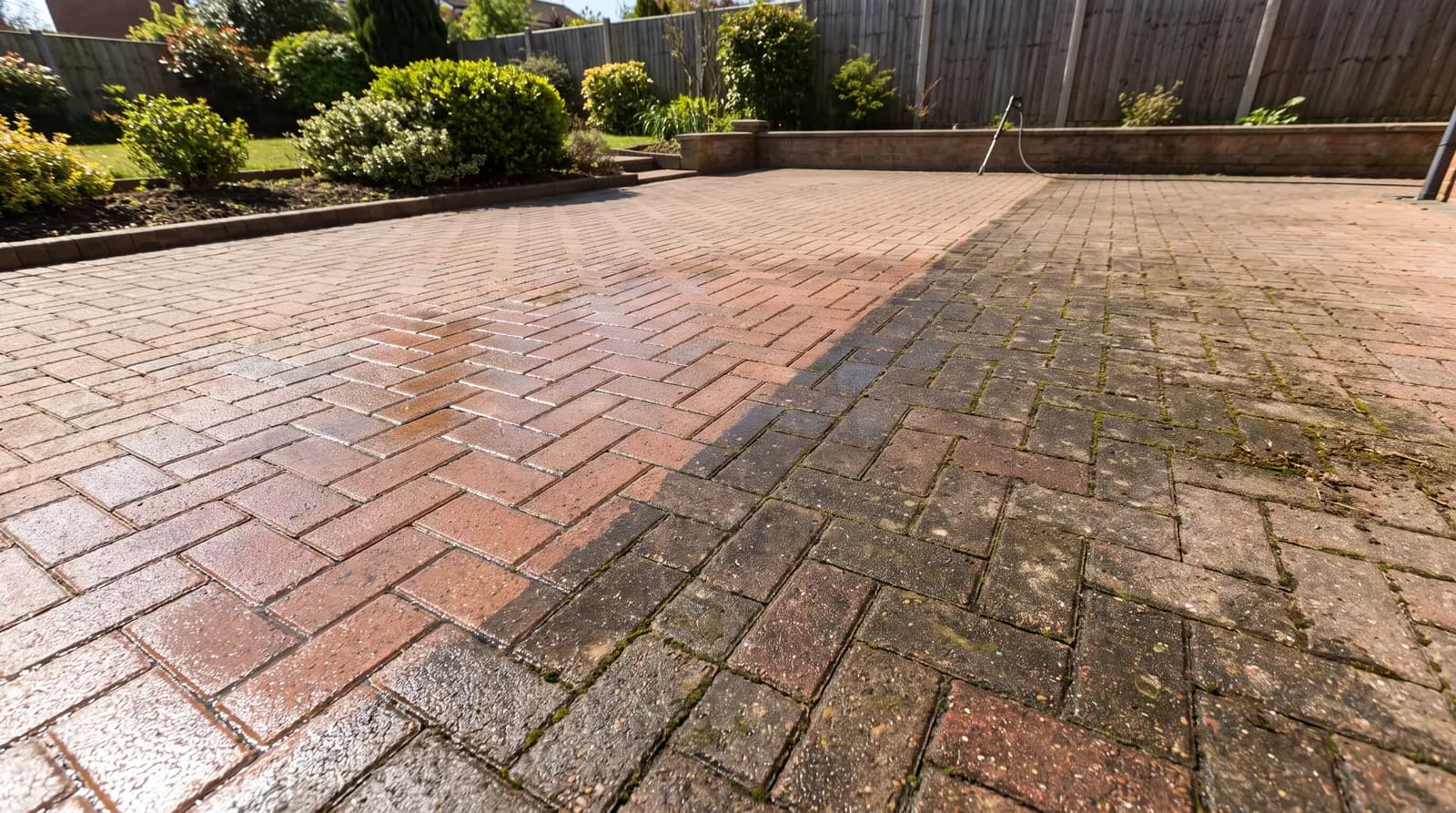
High Pressure vs Soft Wash: Which Does Your Surface Need?
High pressure and soft wash are two different cleaning methods, and choosing the wrong one damages your property. High pressure uses force to strip grime off hard, durable surfaces like concrete, exposed aggregate, pavers and masonry. Soft wash drops the pressure right down and lets a cleaning solution do the work, which is the only safe method for render, painted walls, timber and roofs. The test is simple: if the surface can be scratched, coated, gouged or lifted by force, it needs a soft wash, not a blast.
Key takeaways
- High pressure is for hard, robust surfaces: concrete, aggregate, pavers, masonry, unpainted brick.
- Soft wash is for everything force would harm: render, paint, timber, fibre cement and roofs.
- Soft wash cleans with chemistry, so it often keeps surfaces cleaner for longer.
- Blasting render or a roof is the single most common way DIY and cut-price jobs cause damage.
- The operators we refer choose the method by surface, and we send up to 3 free quotes.
What high pressure actually does
High-pressure cleaning uses a machine to push water at high force through a narrow nozzle. On a durable surface, that force blasts off ingrained grime, tyre marks, black algae and oxidation faster than any other method. It is mechanical: the water is the tool.
That works beautifully on concrete, exposed aggregate, brick and stone paving, and masonry. These surfaces are hard enough that the force lifts the dirt without harming the substrate. This is why driveways and paths are the classic high-pressure job in Adelaide.
What soft washing does differently
Soft washing turns the equation around. Instead of force, it uses a cleaning solution, usually a biocide, applied at low pressure. The solution dwells on the surface, kills the algae, moss, mould and lichen at the root, then gets rinsed away gently.
Because it kills the organisms rather than just knocking off the visible growth, a soft wash often keeps a surface cleaner for longer than a high-pressure blast. And crucially, the low pressure means it will not strip paint, gouge render, splinter timber or force water where it should not go.
The surface-by-surface rule
The decision is not about preference, it is about the surface. Use this as your reference before you accept any quote in Adelaide.
If an operator proposes high pressure on anything in the soft-wash column, treat it as a warning sign and get another opinion. The time saved by blasting is never worth the repair bill.
- High pressure: concrete driveways, exposed aggregate, brick and stone pavers, masonry walls, unpainted brick.
- Soft wash only: rendered walls, painted surfaces, timber decking and fences, fibre cement cladding, feature brick, and all roofs.
- When unsure: soft wash is the safer default, because it cannot damage a surface that could have taken high pressure.
Why roofs and render are the danger zone
Roofs are never a high-pressure job. Force drives water under tiles, blows out the mortar pointing on the ridge caps, and on painted metal or coated tiles it strips the protective layer. What starts as a cleaning job becomes a leak and a re-coat. Roofs are always soft washed.
Render is just as vulnerable. High pressure erodes the top coat, leaves tracking marks, and on acrylic-rendered Adelaide homes it can lift the finish entirely. Painted walls suffer the same way. These are soft-wash surfaces, full stop.
This is the whole reason method matters more than machine. Tell us about your surfaces and we connect you with vetted Adelaide operators who match the method to the job, then send up to 3 free quotes.