Pressure Cleaning Mistakes That Damage Your Property
The most damaging pressure cleaning mistake is using high pressure on a surface that needs a soft wash: render, paint, timber and roofs. Other common errors include holding the nozzle too close, aiming straight at window seals and mortar joints, stripping the sealer off decorative concrete, and blasting a roof so water is driven under the tiles. Almost every serious pressure-cleaning damage bill in Adelaide comes down to the wrong method or the wrong technique on a delicate surface.
Key takeaways
- The number one mistake is high pressure on render, paint, timber or a roof.
- Holding the nozzle too close gouges even durable surfaces.
- Aiming at window seals and mortar joints forces water where it causes damage.
- Blasting decorative concrete strips the sealer and dulls the finish.
- Avoiding these means matching method to surface, which the operators we refer do by default.
Mistake one: the wrong method for the surface
This is the mistake that causes the most expensive damage. High pressure on render erodes and tracks it. High pressure on paint strips it. On timber it splinters the grain, and on a roof it drives water under the tiles and blows out the pointing.
Every one of these surfaces needs a soft wash, where a cleaning solution does the work at low pressure. Getting the method wrong is not a technique error you can correct with care, it is the wrong tool entirely, and it is why matching method to surface is the foundation of safe pressure cleaning.
Mistake two: technique errors on durable surfaces
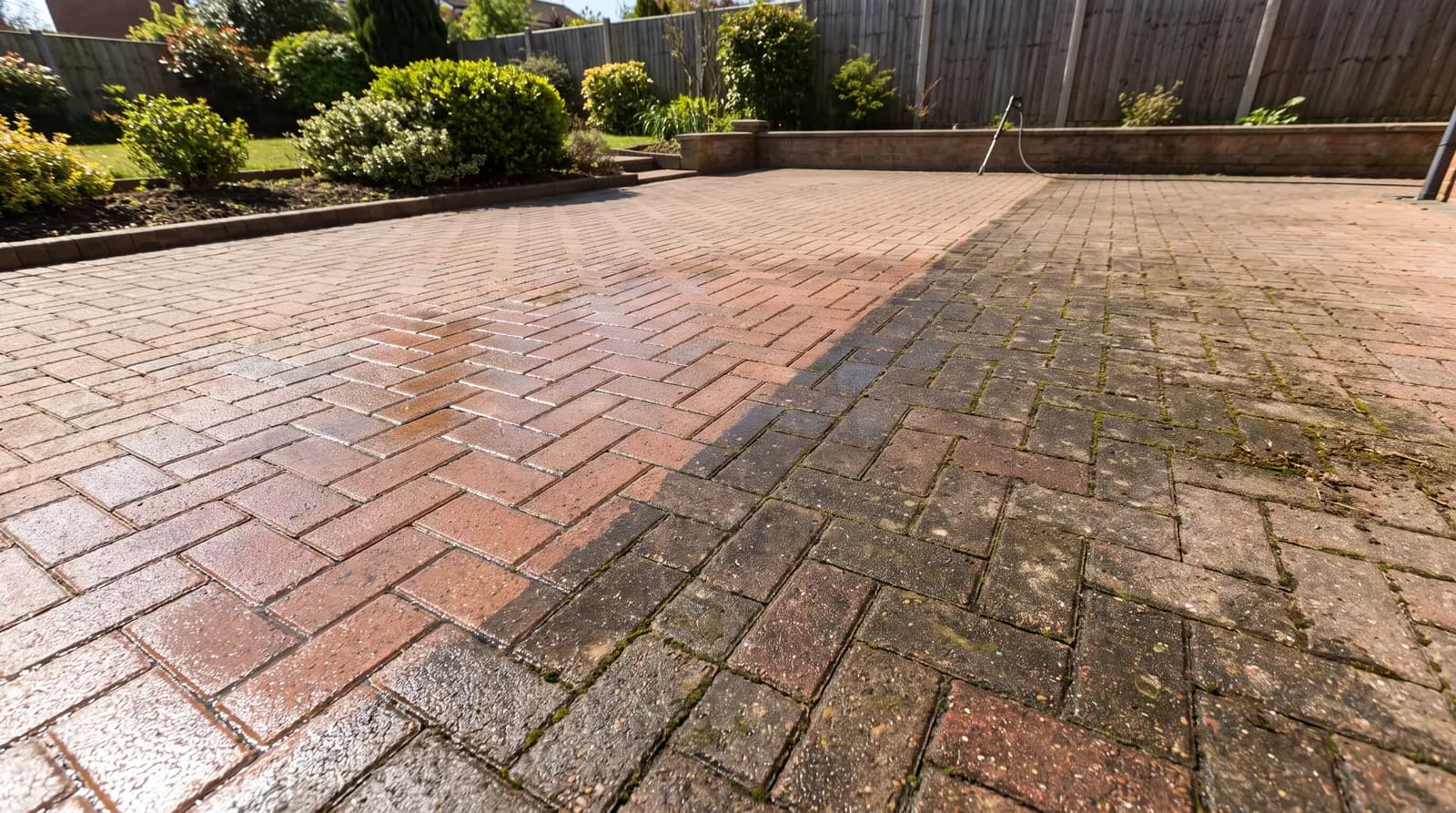
Even on surfaces that can take high pressure, technique matters. Holding the nozzle too close concentrates the force and can gouge concrete, etch pavers or dislodge the stones in exposed aggregate. Lingering in one spot leaves visible cleaning lines and an uneven finish.
The fix is distance, a steady sweeping motion and the right nozzle for the surface. This is craft, and it is a large part of what you pay a professional for.
- Nozzle held too close, gouging or etching the surface.
- Lingering in one spot, leaving tracking lines.
- Wrong nozzle, either too aggressive or too weak.
- Blasting exposed aggregate hard enough to dislodge the stones.
Mistake three: aiming where water should not go
Some damage comes from aiming, not method. Pointing high pressure straight at window and door seals forces water into the frame and the wall cavity, which shows up later as damp and staining. The same goes for mortar joints on older brickwork, where high pressure can wash out soft or lime mortar.
On roofs, aiming up under the tiles or at the ridge caps is how a cleaning job becomes a leak. A careful operator always considers where the water goes after it hits the surface, not just the surface itself.
Mistake four: ignoring the finish and the run-off
Decorative and sealed concrete has a protective layer that high pressure can strip, leaving the surface dull and more prone to staining afterwards. Blasting it as if it were plain concrete ruins the finish you paid for.
Run-off is the quieter mistake. Chemicals and dislodged growth need to be directed away from garden beds, drains and waterways responsibly. A professional plans for this, which is another reason a vetted operator beats a cut-price blast. Tell us your job and we connect you with operators who avoid all of these, then send up to 3 free quotes.