How Often Should You Clean Solar Panels in Adelaide?
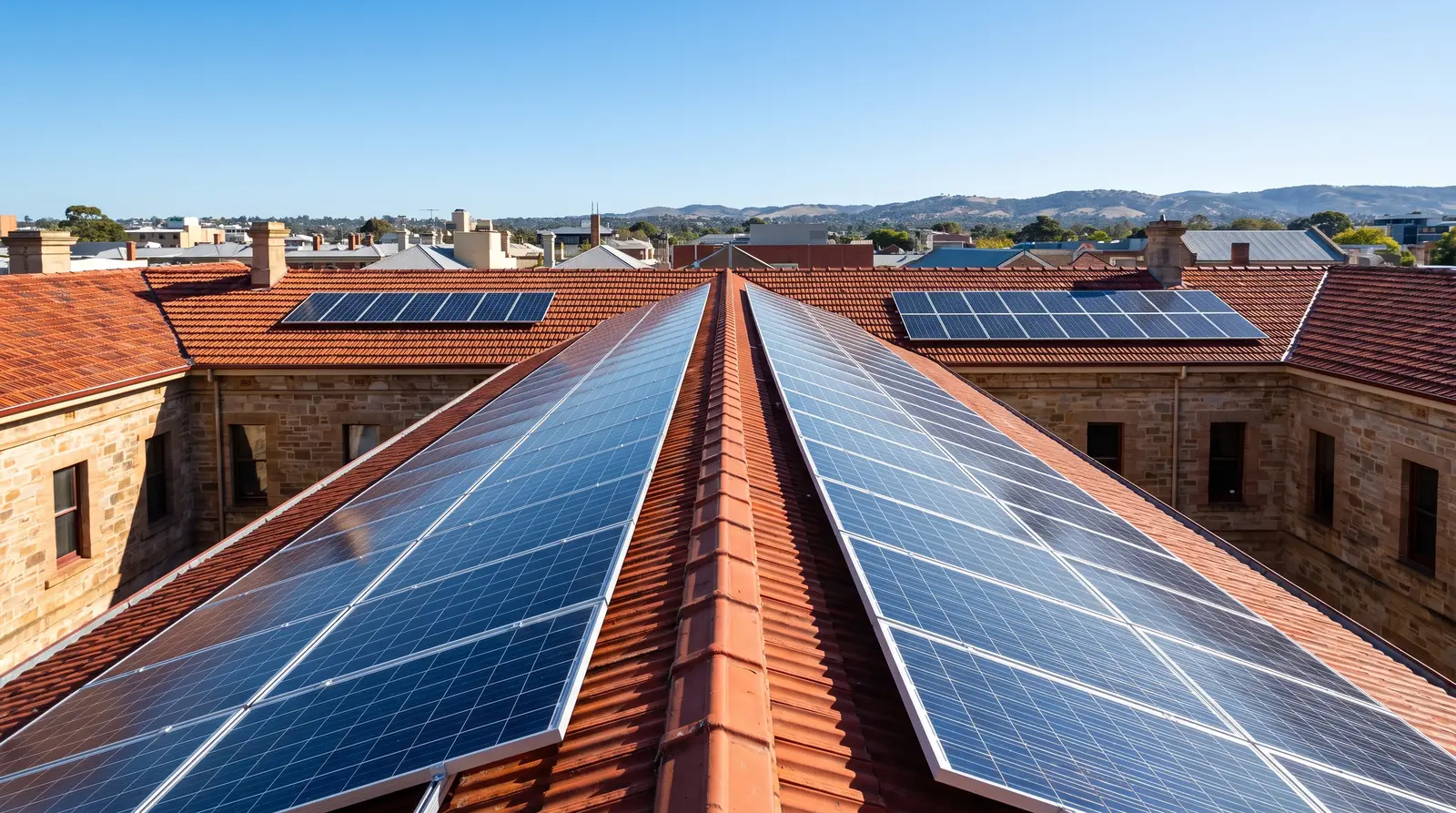
Most Adelaide solar panels should be cleaned once or twice a year. An annual clean suits steeply tilted panels away from trees in a low-dust suburb, while twice a year suits coastal homes, properties near unsealed roads or construction, homes under gum trees, and low-pitch roofs where dirt does not slide off. The most reliable guide is your own monitoring: if output tracks below last year's for the same weather, it is time. Panels are cleaned only with pure or deionised water and soft brushes. We connect you with vetted Adelaide operators for free quotes.
Key takeaways
- Once a year is the baseline, twice a year for harsher conditions.
- Coastal salt, trees, unsealed roads and low roof pitch all push you toward twice a year.
- Your inverter monitoring is the best trigger: clean when output drops for similar weather.
- We connect you with vetted local operators, we never clean panels ourselves.
The baseline: once or twice a year
For a typical Adelaide home, a solar clean once or twice a year keeps the array producing close to its potential without over-servicing it. One clean a year is enough for panels with a decent tilt, in a suburb without much dust, and away from overhanging trees. Two cleans a year suit the homes that collect grime faster, and there are a lot of those in Adelaide.
Cleaning more often than twice a year rarely pays off unless something specific is going on, like a nearby building site or a bird roost directly above the array. The goal is not spotless glass at all times, it is keeping soiling losses small enough that they never eat a meaningful chunk of your production.
What pushes you toward twice a year
Several Adelaide-specific factors move a home from the annual camp into the twice-yearly camp. If two or more of these apply to you, plan on cleaning twice a year.
- Coastal suburbs like Semaphore, Henley Beach, Glenelg and Grange, where salt haze forms a sticky film.
- Homes near unsealed roads or active construction, common across the growing northern estates.
- Panels under or beside gum trees, which drop leaves, sap and attract birds.
- Low-pitch or near-flat roofs, where rain cannot run off and carry grime away.
- Arrays near a bird roost or on flight paths, where droppings accumulate quickly.
Let your monitoring make the call
The most accurate schedule is not a fixed date, it is your own production data. Every modern inverter comes with a monitoring app that logs output. Compare the current month against the same month last year. If production is down for similar weather and nothing else has changed, soiling is the likely cause and a clean is due.
This approach beats guessing because it adapts to your actual conditions. A dry, dusty run of weeks will soil panels faster than a mild one, and your data will show it. Watching the numbers also flags sudden problems, like a fresh batch of bird droppings, that a fixed calendar would miss for months.
Roof pitch and self-cleaning
Panel angle matters more than most owners realise. Steeply tilted panels get some free help from rain, which runs off and takes a little grime with it, so they stay cleaner between washes. Flat or low-tilt panels get almost no self-cleaning, so dust and pollen sit and bond, and water can pool and dry into spotting.
If your panels are close to flat, treat twice a year as the default and watch your monitoring closely. Whatever your pitch, the cleaning itself must be done with pure or deionised water and soft brushes and never a pressure washer, so the frequency conversation never becomes a damage conversation. We connect you with vetted Adelaide operators who clean the safe way, so you can compare free quotes.