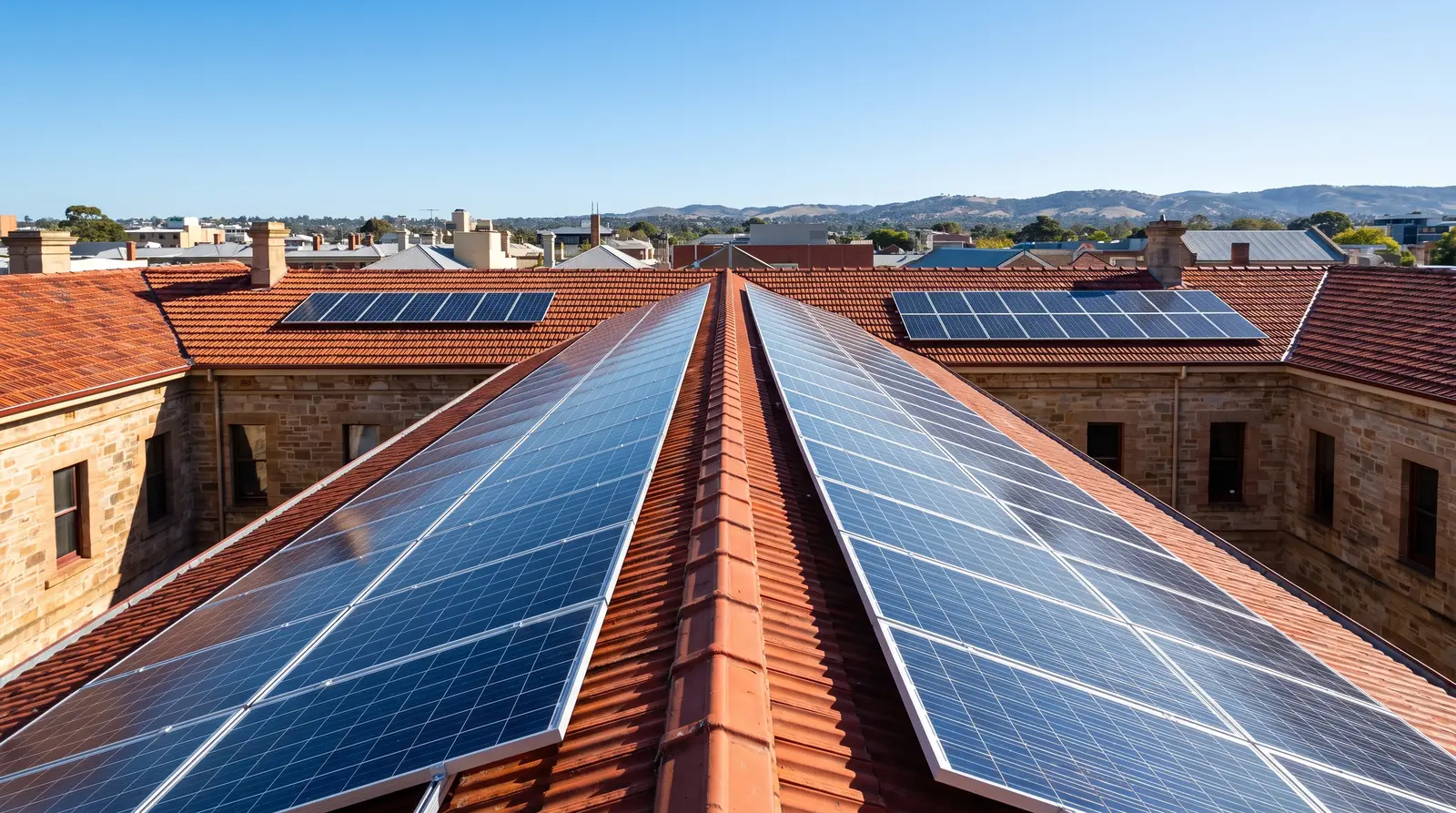
Do Dirty Solar Panels Really Lose Output? (Adelaide Data)
Yes, dirty solar panels lose real, measurable output. A film of dust and pollen blocks light across the whole array, while bird droppings and leaf litter shade individual cells and can drag down a whole cell string. In Adelaide's dry, dusty climate the loss builds through summer and is often invisible on the roof but clear on your monitoring. A proper clean, using pure or deionised water and soft brushes, usually recovers most of the lost production. This site does not clean panels. We connect you with vetted Adelaide operators for free quotes.
Key takeaways
- Dust and pollen cause a steady whole-array loss, bird droppings cause sharp localised loss.
- Because cells wire in strings, one shaded spot can drag down far more than its own area.
- Adelaide's dry summers let grime bake on instead of rinsing off, so losses accumulate.
- A safe clean usually recovers most of the lost output, we connect you with vetted operators.
How dirt turns into lost kilowatt-hours
A solar panel converts the light that reaches its cells into electricity. Anything on the glass that blocks or scatters that light reduces what the panel can produce. A light, even dust layer trims output a little across the whole panel. The bigger losses come from anything opaque sitting in one place, because of how the cells are wired.
Cells inside a panel are connected in series into strings. Current has to flow through the whole string, so if one cell is heavily shaded by a bird dropping or a clump of leaves, it acts like a partial roadblock and pulls down the output of every cell in that string. This is why a small, dark deposit can cost far more production than its physical size suggests, and why bird droppings are the enemy of solar owners.
Why Adelaide roofs get dirty fast
Adelaide's climate is close to a worst case for soiling. Summers are long, hot and dry, so dust and pollen settle on the glass and bake into a bonded film rather than washing away. When rain does come, it is often a brief shower that wets the dust into a muddy layer and then dries, which can leave the panel dirtier than before.
Location sharpens the effect. Homes near unsealed roads, new estates under construction in the north, or under flowering gums cop more debris. Coastal suburbs like Semaphore, Henley Beach, Glenelg and Grange pick up airborne salt that forms a sticky haze on the glass. Large northern arrays in areas like Mawson Lakes and Munno Para simply have more surface collecting all of this at once.
- Long dry spells let dust and pollen bond to the glass.
- Light rain often muddies panels rather than rinsing them.
- Coastal salt haze forms a film ordinary rain does not shift.
- Trees and construction dust add opaque, high-loss debris.
Reading the loss on your own system
You do not need special equipment to see soiling losses. Your inverter's monitoring app records daily and monthly production, and the clearest signal is a year-on-year comparison. If this summer's output is tracking below last summer's for similar weather, and you have not changed anything else, dirt is a leading suspect.
A sudden step down in output, rather than a gradual drift, often points to a specific cause like a fresh set of bird droppings or a branch dropping leaves onto one part of the array. Flat or low-tilt panels show soiling losses sooner than steep ones, because rain cannot run off and self-clean them.
How much a clean gets back
A correct clean removes the film and the deposits and lets the full surface collect light again, which usually recovers most of the output that soiling took away. The recovery is largest on arrays that were genuinely dirty, near the coast, under trees, or overdue for a wash. On an already-clean panel a wash does little, which is why frequency should follow your conditions rather than a fixed calendar.
The catch is that the recovery only holds if the cleaning is done safely. A pressure washer or harsh chemical can crack glass, breach seals or strip the anti-reflective coating, which does lasting damage and can void the warranty. Panels must be cleaned with pure or deionised water and soft brushes. We connect you with vetted Adelaide operators who clean the safe way, so you can compare free quotes.