Can You Clean Solar Panels Yourself? (Risks and Safety)
You can clean solar panels yourself only if you can reach them safely from the ground, and only with soft methods: a soft brush, plenty of plain water and no pressure washer or harsh chemicals. For roof-mounted panels, DIY is genuinely risky because of fall danger and the ease of scratching glass or voiding the warranty. Adelaide's hard tap water also leaves mineral spotting that undoes the clean, which is why operators use deionised water. This site does not clean panels. We connect you with vetted Adelaide specialists for free quotes.
Key takeaways
- Ground-mount panels can be safely cleaned yourself with a soft brush and plain water.
- Roof-mount DIY carries real fall risk and is best left to insured operators with height-safety gear.
- Never use a pressure washer or harsh chemicals: they damage the coating, seals and warranty.
- Adelaide's hard water spots the glass, so professionals use deionised water for a clean finish.
When DIY is reasonable
If your panels are ground-mounted, or on a single-storey roof you can reach safely from a stable position without climbing onto the roof, a careful DIY clean is reasonable. The method is simple and gentle: rinse with plain water to lift loose dust, then wipe or brush lightly with a soft brush or soft microfibre head and more water, and rinse again. Early morning or late afternoon is best, when the glass is cool.
The mindset that keeps you safe is treating the glass as delicate. No scrubbing pads, no scouring, no detergents or glass cleaners, and above all no pressure washer. The point of a DIY clean is to remove dust without touching the surface hard enough to scratch it or damage the coating.
Why roof DIY is the risky part
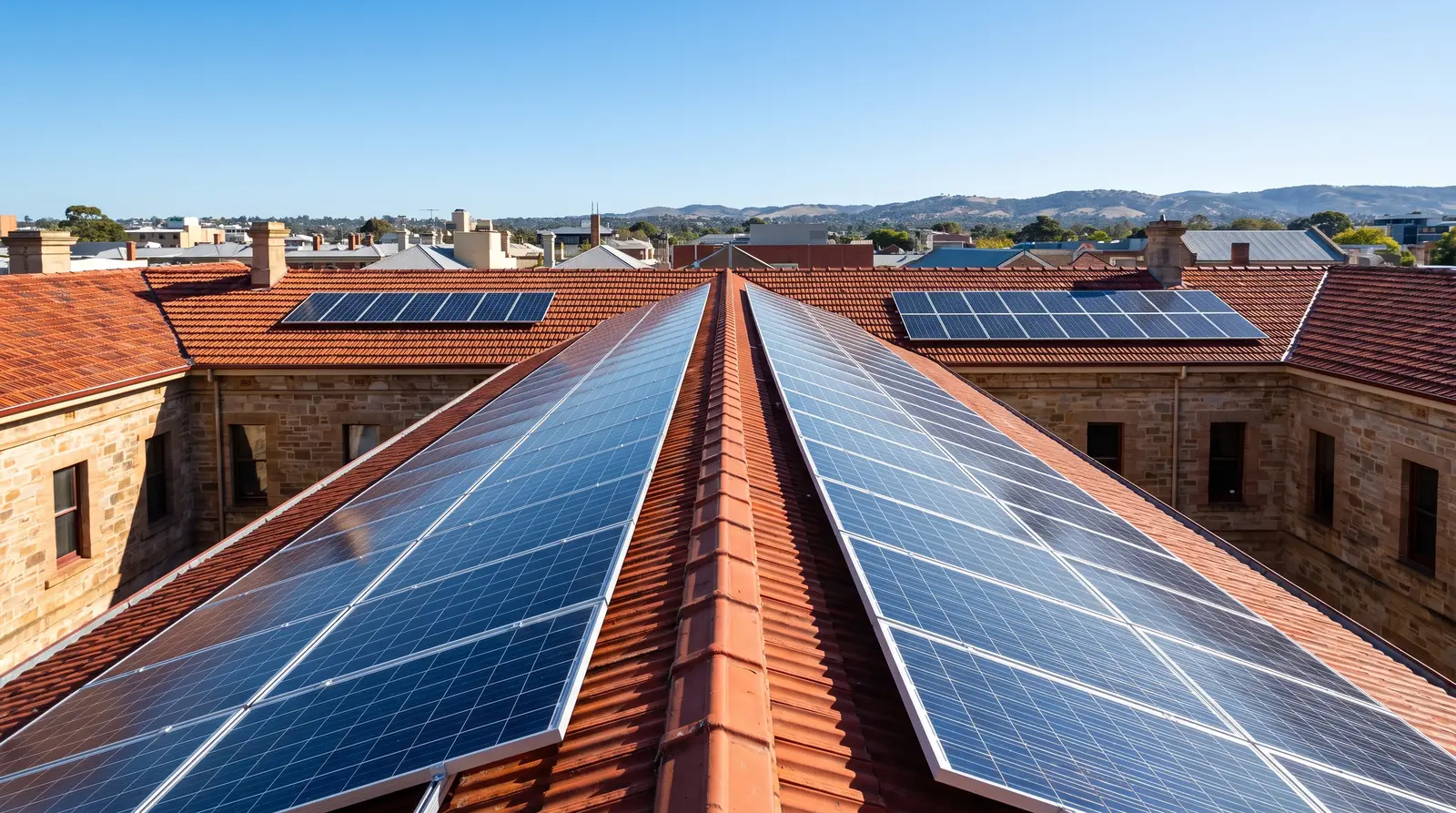
The danger of cleaning roof-mounted panels is rarely the cleaning. It is the height. Roofs are slippery when wet, tiles crack under foot in the wrong spot, and a fall from a single-storey roof can be life-changing. Adding a hose and a brush to that situation, on a double-storey home or a steep pitch, is exactly the scenario that sends people to hospital.
Professional operators manage this with harnesses, anchor points, the right access equipment and the training to use them, plus public liability insurance if something goes wrong. That is a large part of what you pay for, and it is why reaching the panels safely, not cleaning the glass, is the real job on most Adelaide roofs.
The hard-water problem and the coating
Even a careful DIY clean with a garden hose hits an Adelaide-specific snag: hard tap water. Our water carries dissolved minerals, so when droplets dry on the glass they leave a chalky spotting that can look worse than the dust you removed. That is why professional operators use pure or deionised water, which dries clear and leaves no residue.
There is also the coating to protect. Modern panels have an anti-reflective coating on the glass that helps them absorb light. Abrasive pads, scouring, and especially high pressure or harsh chemicals can strip or damage that coating, permanently reducing output. Once it is gone you cannot put it back, so a shortcut that saves an hour can cost years of performance.
- Hard Adelaide tap water dries to mineral spotting; deionised water dries clear.
- The anti-reflective coating is damaged by abrasives, high pressure and harsh chemicals.
- Damage to the coating is permanent and lowers output for the life of the panel.
The warranty and when to call an operator
Most panel manufacturers set out how panels may be cleaned, and using a pressure washer, abrasives or harsh chemicals typically breaches those terms and can void your warranty. A DIY clean that damages a panel gives you no one to claim against, whereas a proper operator cleans within the manufacturer's rules and carries insurance.
The sensible line is this: clean ground-level panels yourself if you are comfortable and gentle, but hand roof-mounted arrays to an insured operator with height-safety gear and deionised water. This site does not clean panels. We connect you with vetted Adelaide solar cleaning specialists so you can compare free quotes and get the roof job done safely.